
Physics Is Easier Than You Think:
From Classical to Neural Elastic Simulation
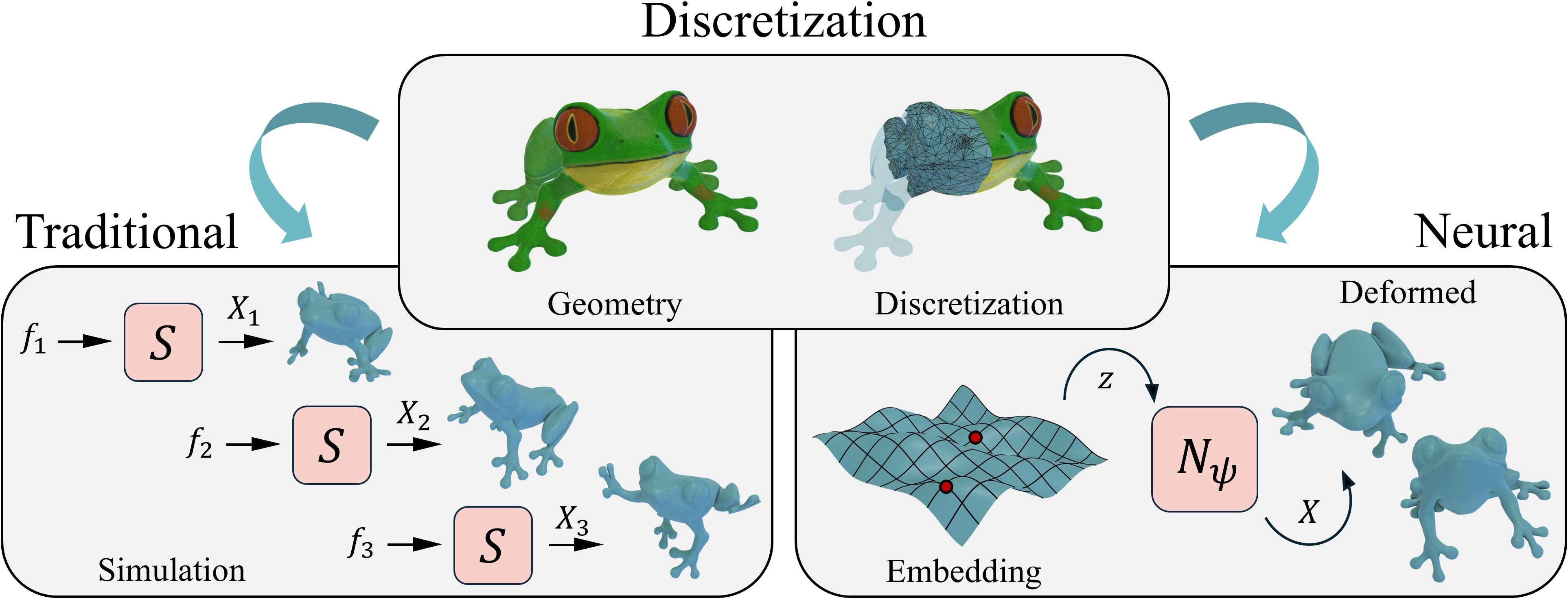
The demand for high-fidelity, physically-based animation has traditionally been met by sophisticated solvers rooted in elastodynamics and finite element analysis (FEM). Recently, the emergence of neural physics has led to a paradigm shift, transforming neural networks into solvers with memory that dramatically increase the scale and speed of digital environments. Despite its reputation, physics-based simulation does not have to be intimidating. This course aims to demystify the field, proving that these complex systems are accessible and intuitive to beginners when approached from the lens of optimization. Designed for a broad audience, including students, engineers, researchers, and artists, this course balances theory with practice. To ensure these concepts are immediately actionable, we provide comprehensive reference code for all discussed methods.
Schedule Overview
A 3-hour course program
A 3-hour course covering the spectrum from classical physics-based simulation methods to cutting-edge neural physics approaches.
Warm-Up
Jernej Barbič • University of Southern California
Stay tuned!
Break and Q&A
Classical Elastic Simulation 1
Otman Benchekroun • University of Toronto
- Elastostatics
- Finite elements
- Deformation gradient
- Elastic energies
Break and Q&A
Classical Elastic Simulation 2
Otman Benchekroun • University of Toronto
- Numerical solvers
- Elastodynamics
- Contact
Neural Physics 1
Davide Corigliano • ETH Zurich
- Why neural physics?
- Neural networks primer
- From the classical to the neural
- Neural contacts
Break and Q&A
Neural Physics 2
Davide Corigliano • ETH Zurich
- Neural fields
- Neural embeddings
- Neural physics baking
- Neural physics design
Final Q&A
Tutorials
Hands-on material to follow along
Each tutorial provides reference code and step-by-step explanations covering the methods discussed in the course.
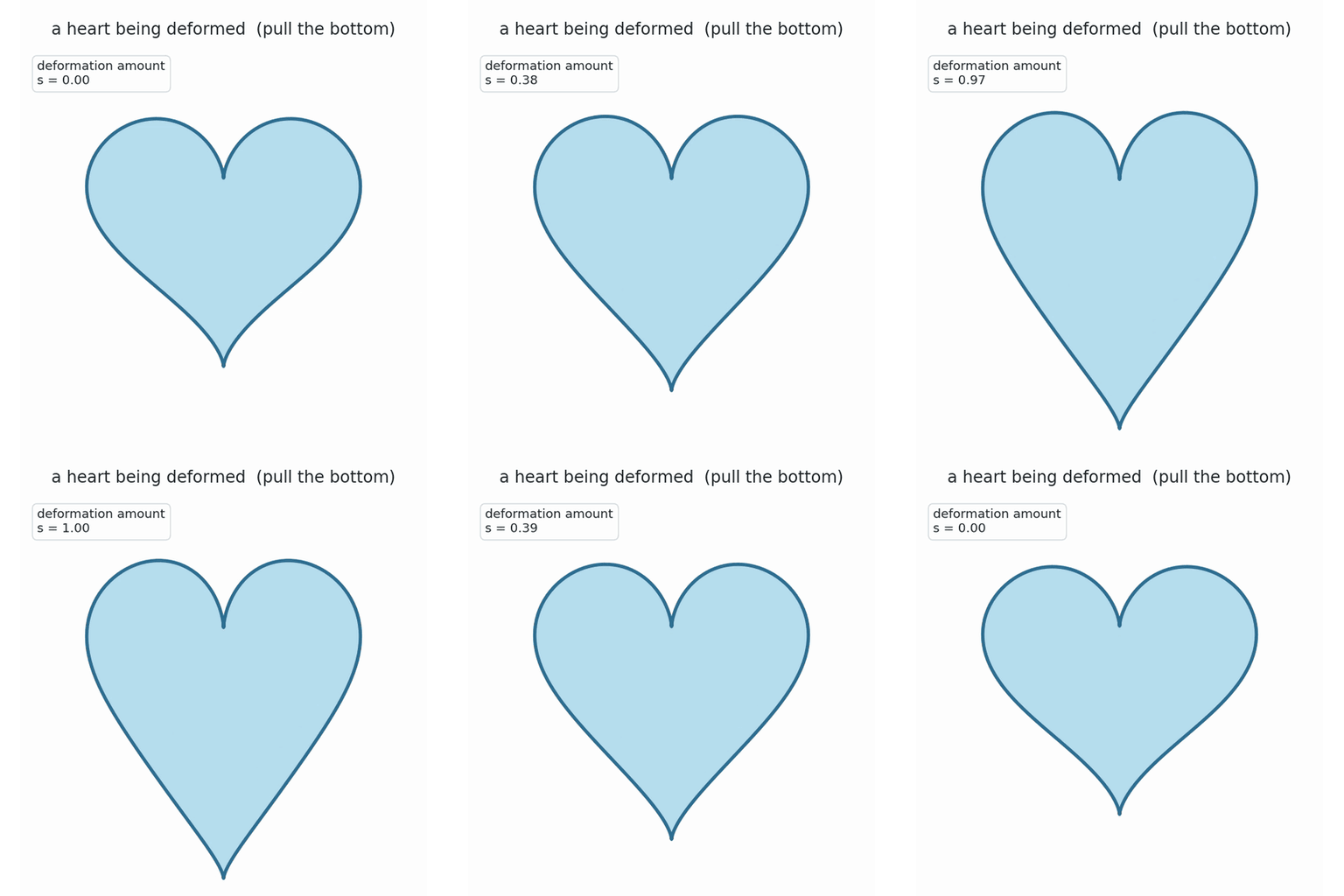
Classical Physics: Elastic Energy
Build an elastic energy from scratch: the deformation gradient, what it does to a triangle, and why rotations must cost nothing. Ends with a Neo-Hookean energy you write yourself.
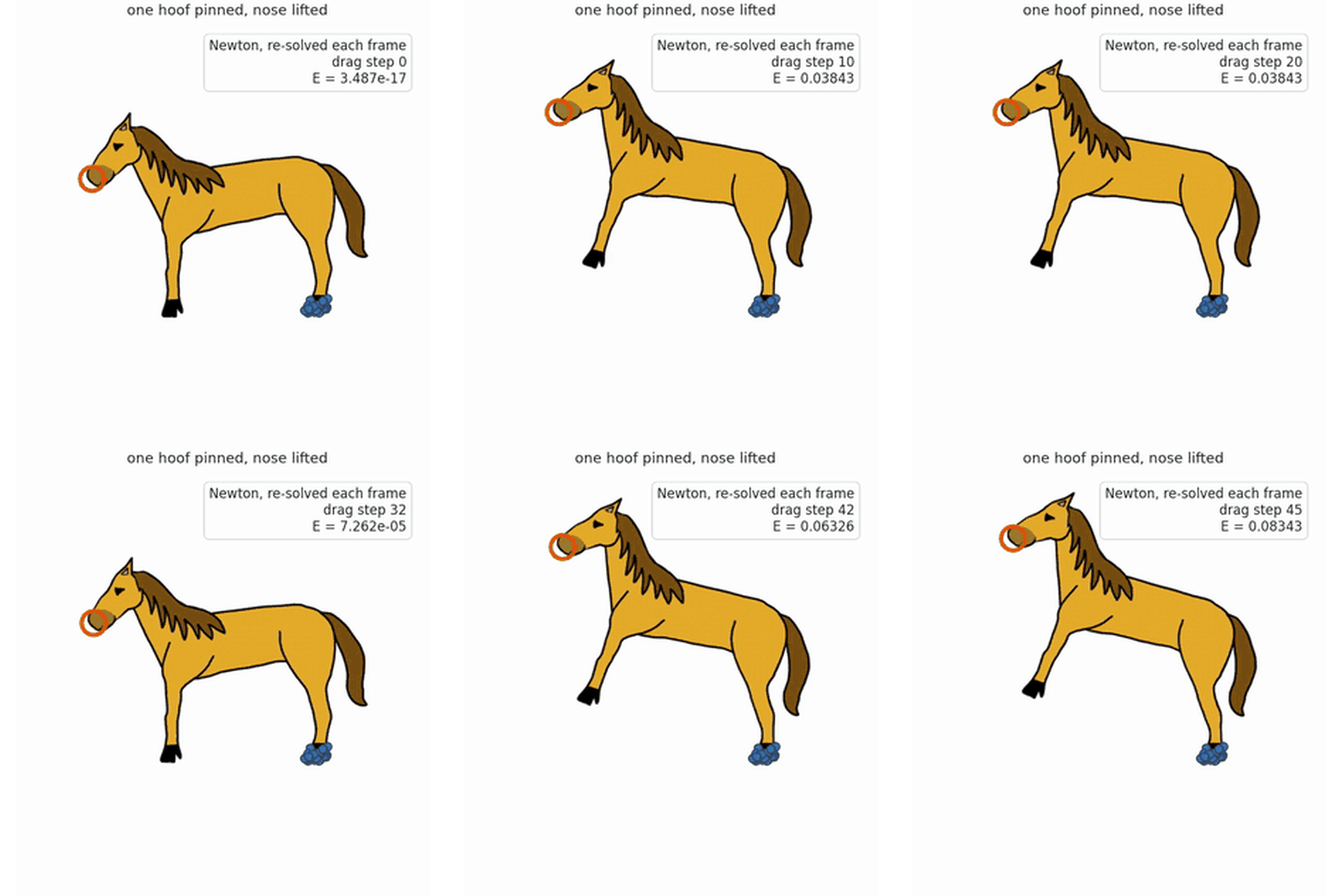
Classical Physics: Numerical Solvers
Turn that energy into motion by minimizing it. Covers gradient descent against Newton's method, analytic gradients and Hessians, and the load stepping that keeps large deformations stable.
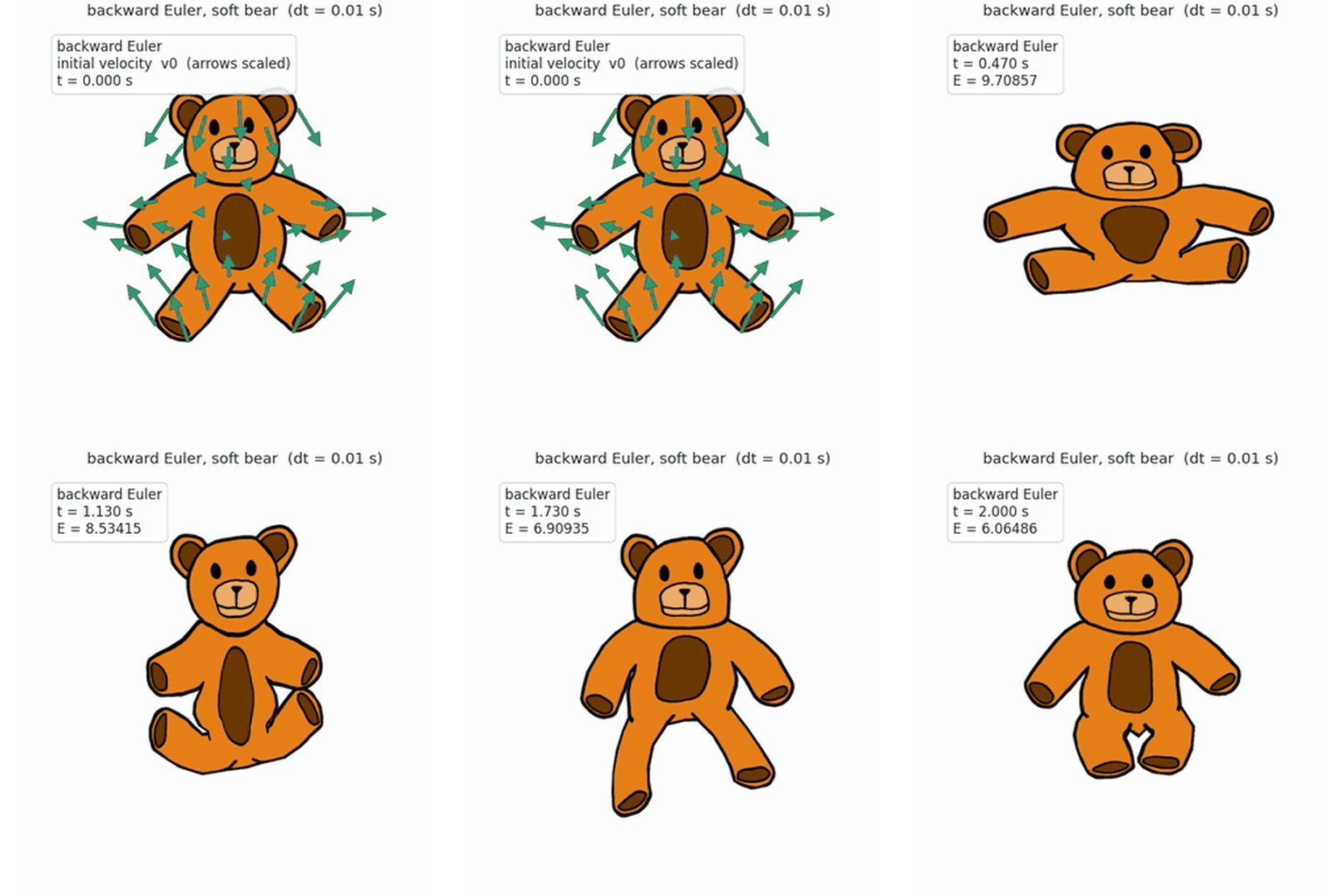
Classical Physics: Elastodynamics
Add time: forward Euler and why it explodes, then backward Euler written as a minimization. It needs one new energy term, and the solver from the previous tutorial handles the rest.
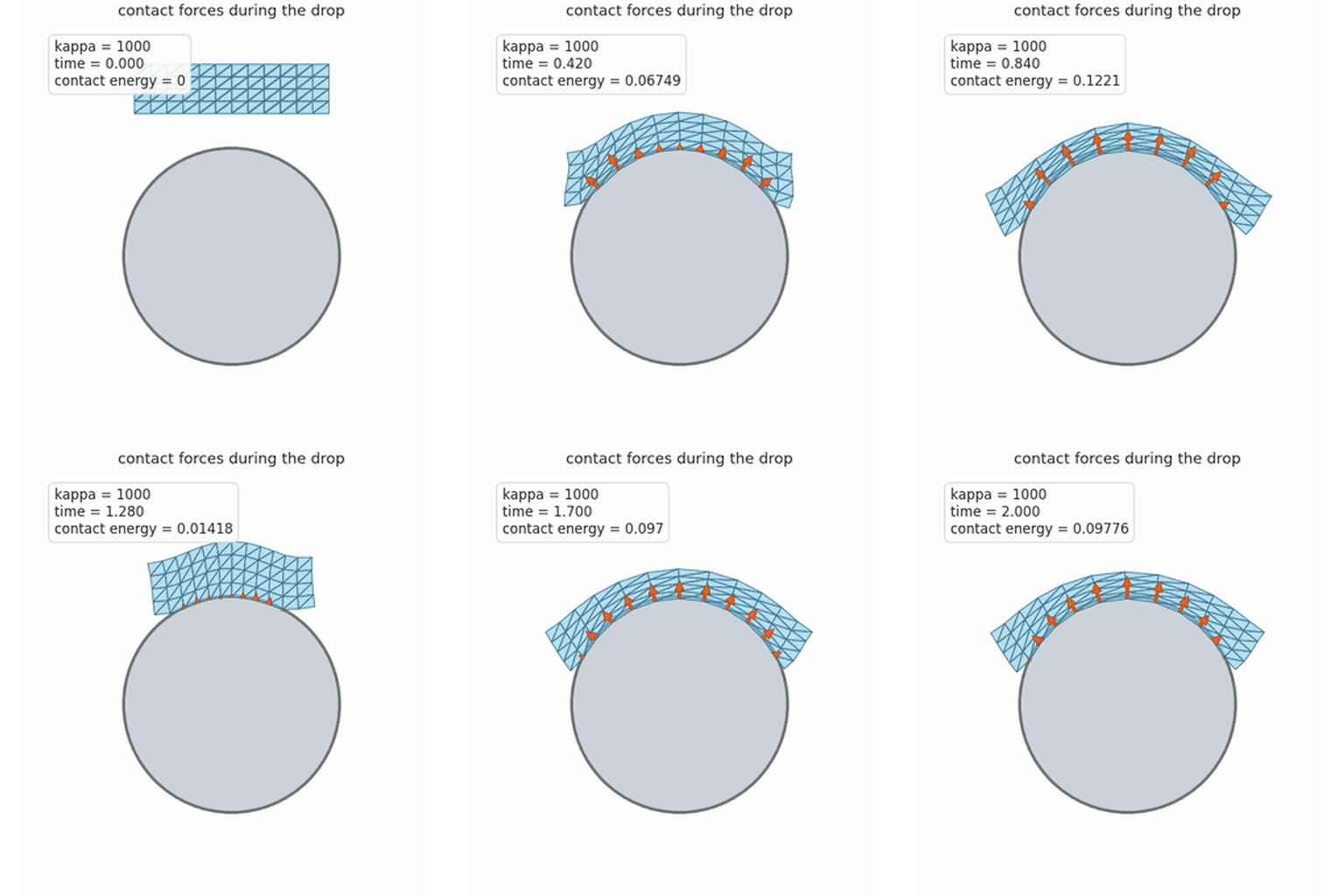
Classical Physics: Contact
Stop objects passing through each other using signed distance fields and a cubic penalty energy, which is one more term in the same minimization.
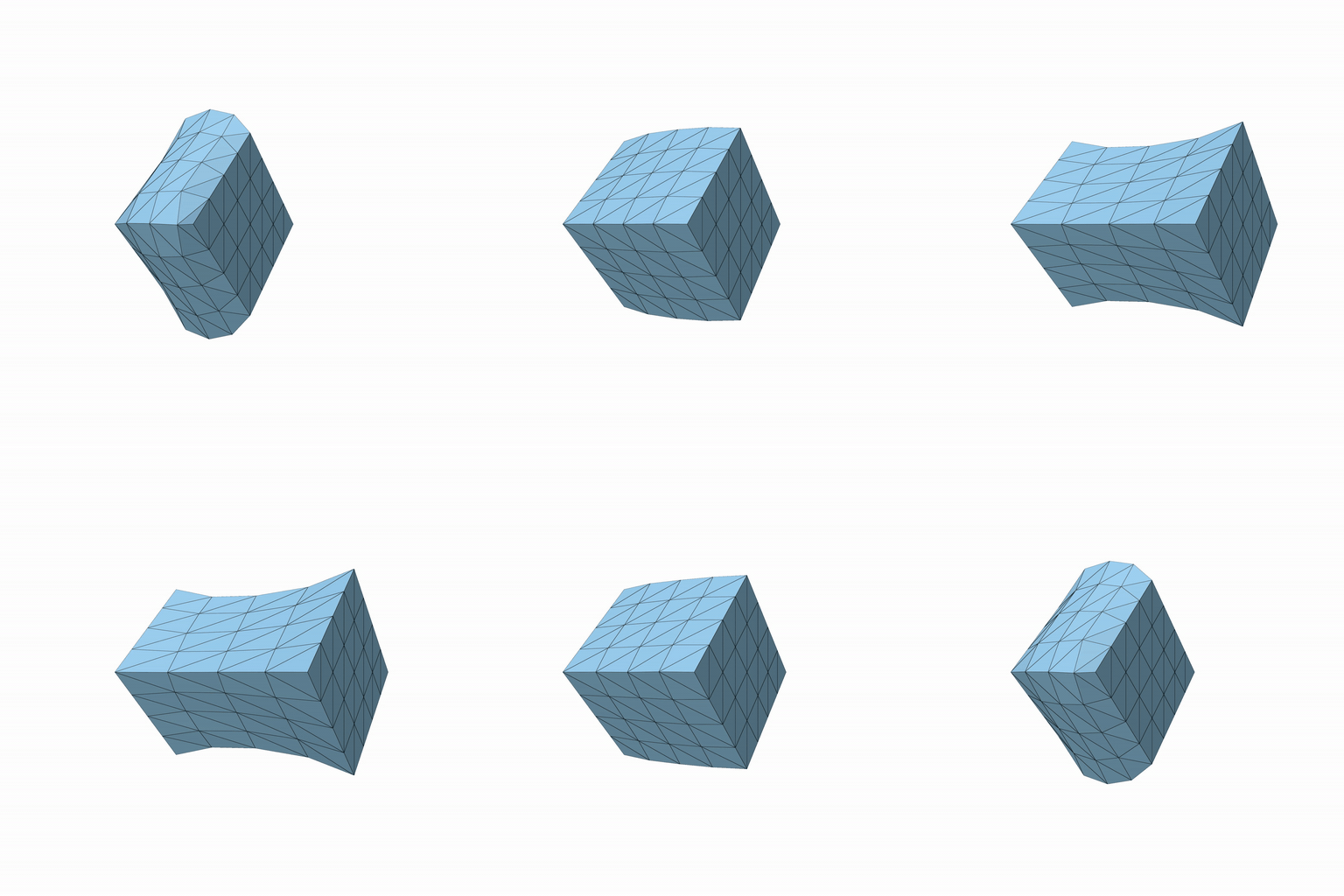
Neural Physics: Stretchy Cube
Build a neural simulator to predict the equilibrium states of a deformable cube — a practical introduction to elastostatics and neural network architectures.
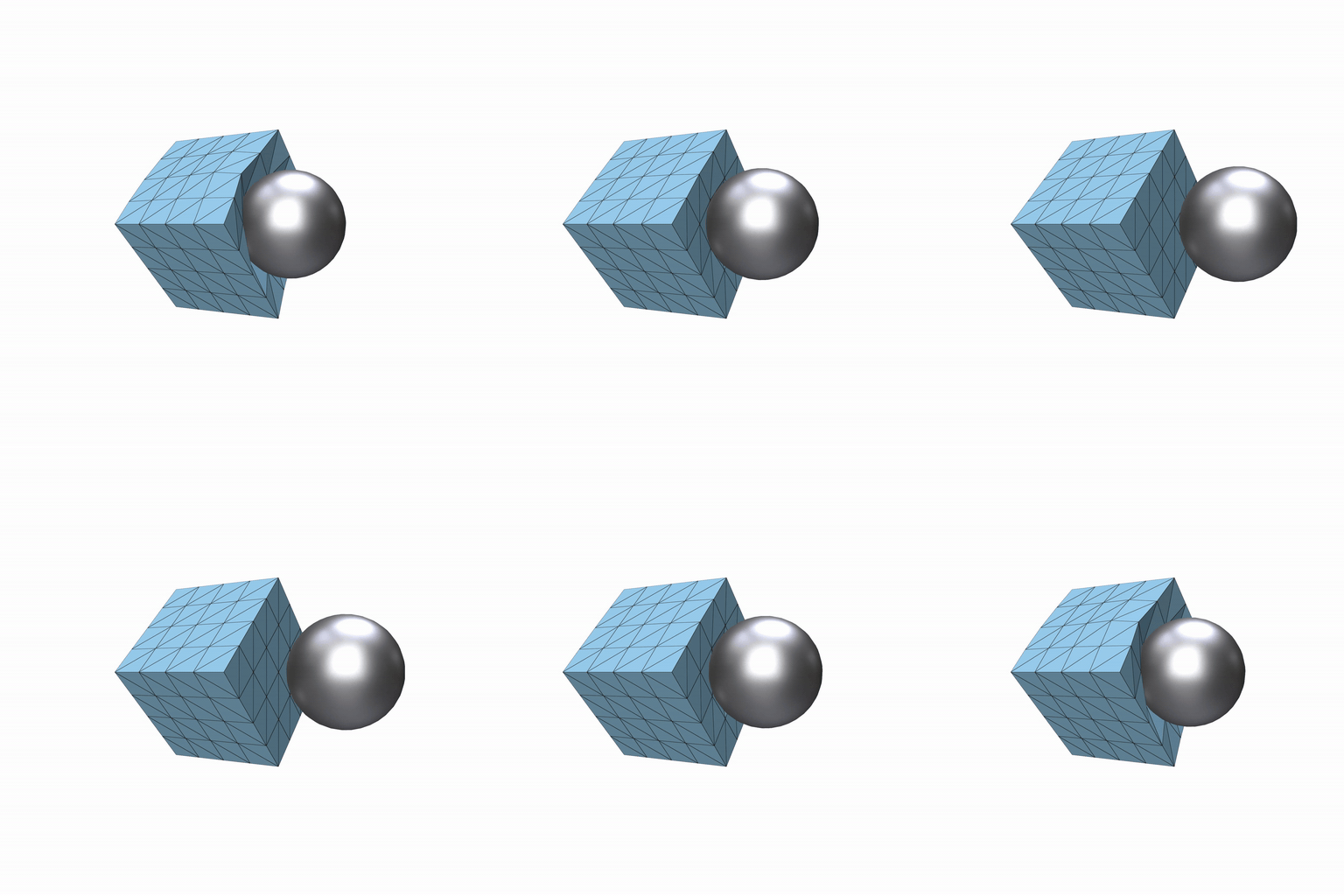
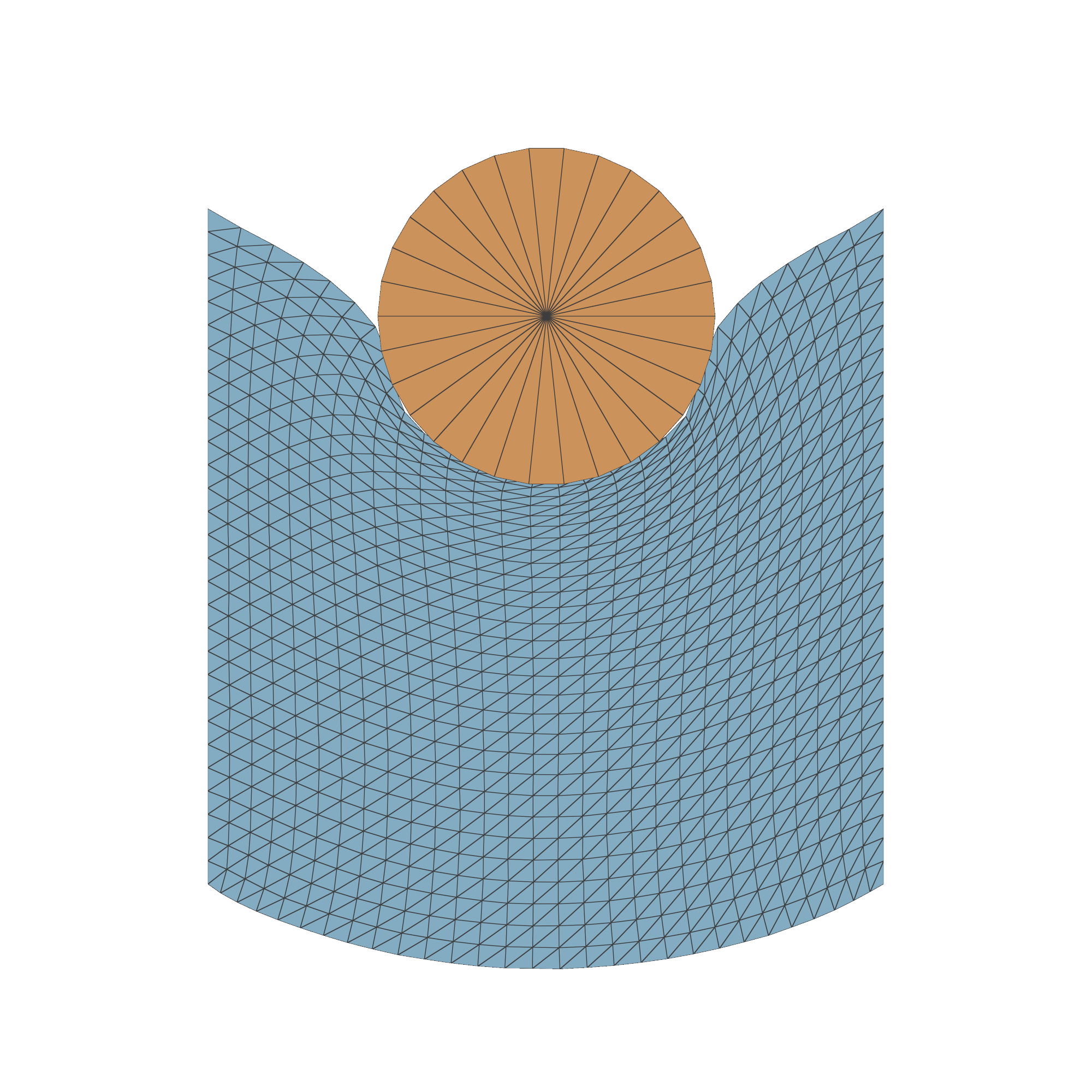
Neural Physics: Sphere-Cube Contacts
Extend the neural simulator to handle a deformable cube colliding with a rigid sphere, adding contact mechanics to the elastostatics framework.
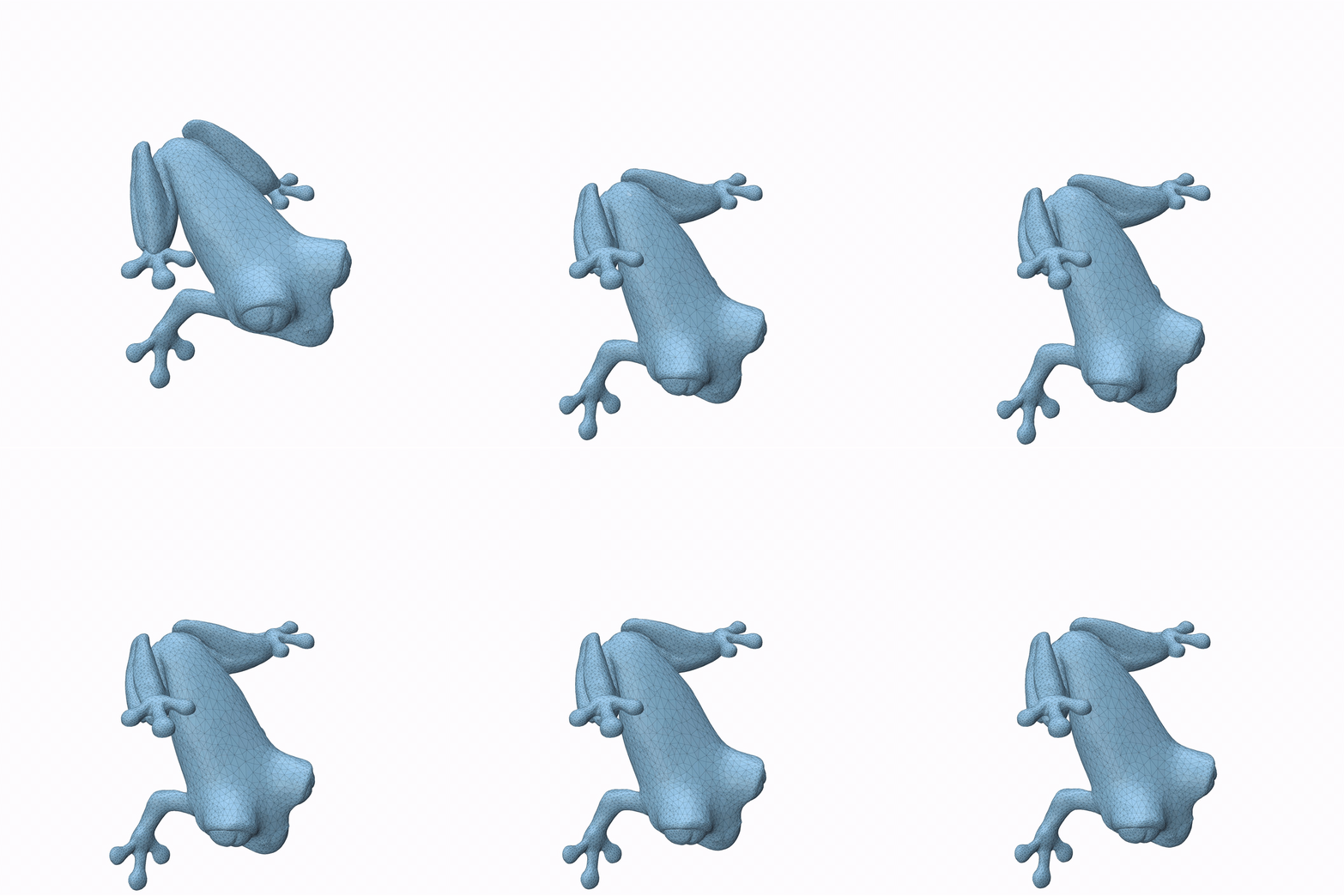
Neural Physics: Reduced Order Kinematics
Fit a neural network that maps a compact latent vector to full mesh configurations, trained purely from potential energy — no simulation data required.
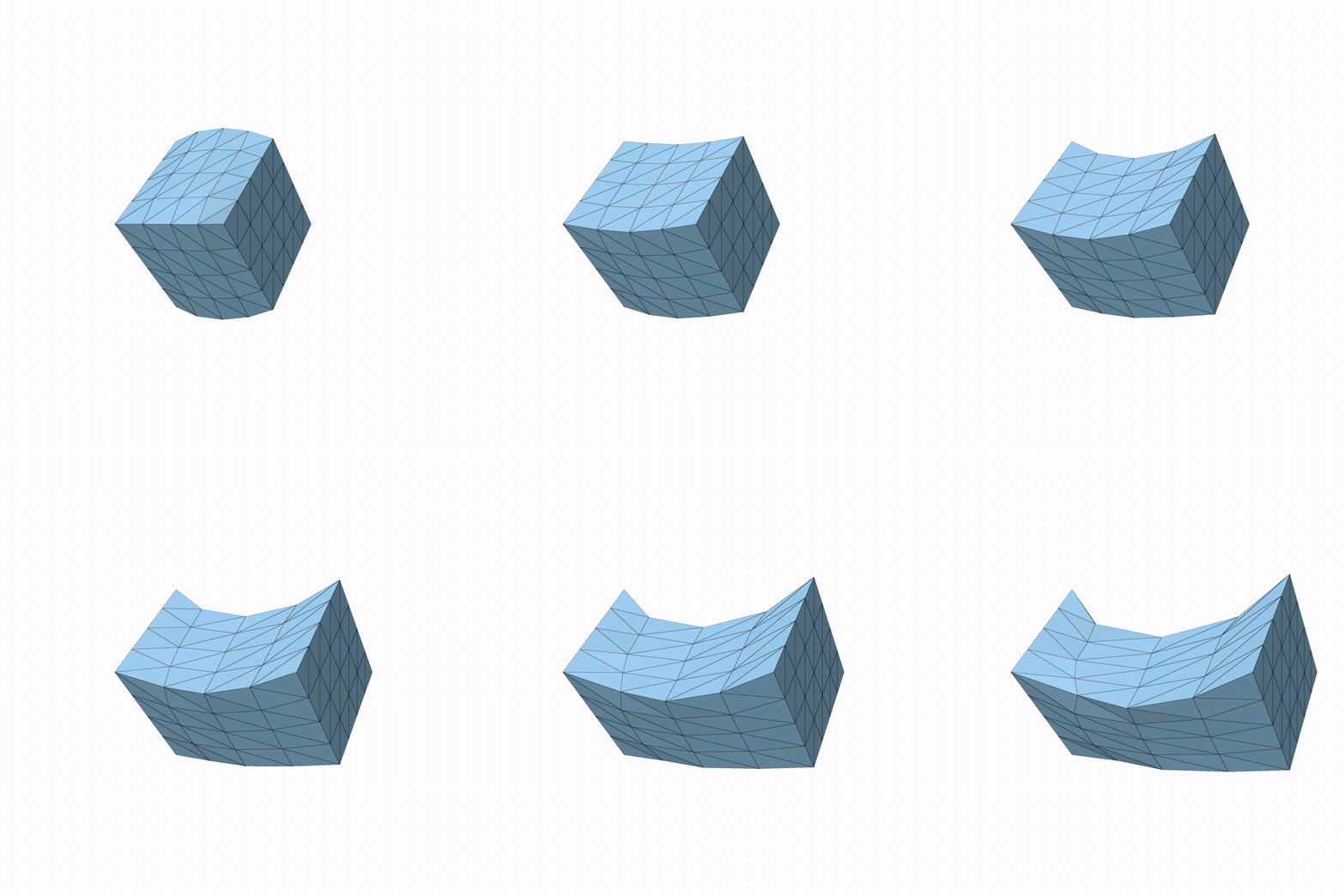
Neural Physics: Baking
Expand the neural simulator for the stretchy-cube by including blendshapes - a tutorial on how to extend existing rigs using physics.
Neural Physics: Inverse Design
Optimize material and shape parameters of a deformable object to achieve a target deformed configuration using gradient-based inverse design.
Course Speakers
The lecturers for each part of this course
Starting from the applications of Physically-Based Simulation, the speakers will uncover the basics of Traditional Elasticity and model Neural Physics.

Organizers
The team behind this course
Davide Corigliano is a PhD student at the ETH Zurich Computer Graphics Laboratory, where he is supervised by Prof. Dr. Barbara Solenthaler and Dr. Bernhard Thomaszewski. His research operates at the intersection of physically-based simulation, digital humans, and biomechanics. By integrating advanced simulation techniques with machine learning, Davide focuses on the real-time prediction of medical treatment outcomes. Before joining ETH, He completed internships and research work at Disney Research and Epic Games, where he worked on animation and digital humans.
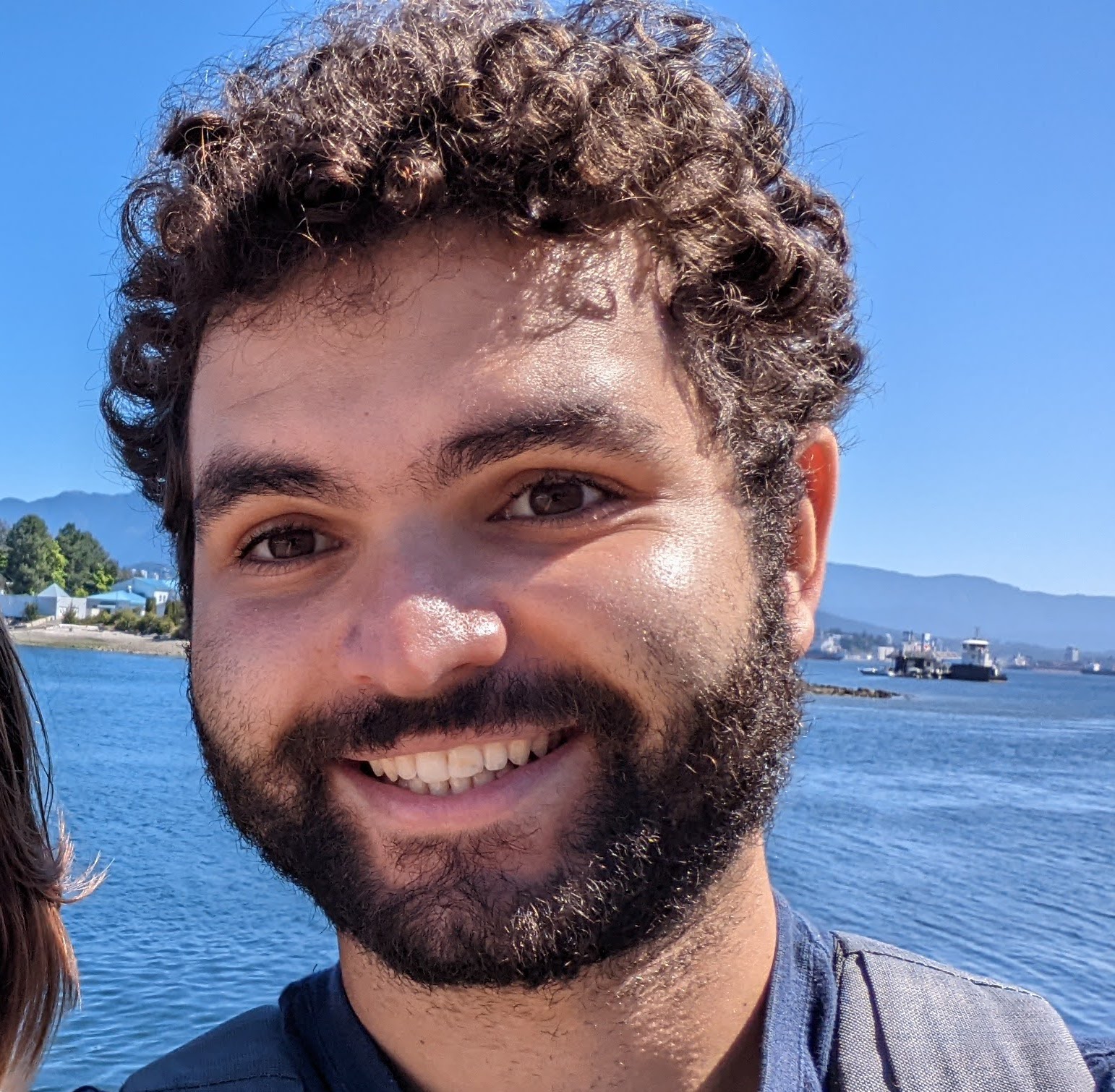
Otman Benchekroun is a PhD student at the University of Toronto, advised by Prof. Dr. Eitan Grinspun. His research lies at the intersection of physical simulation and reduced-order modeling, with a focus on building faster ways to simulate deformable objects without losing physical meaning. He's completed research internships at Adobe, Roblox, and Meta, where he worked on problems in animation, physics, and real-time tooling.
Citation
If you found this course useful, please cite it as
@inproceedings{Corigliano2026Physics,
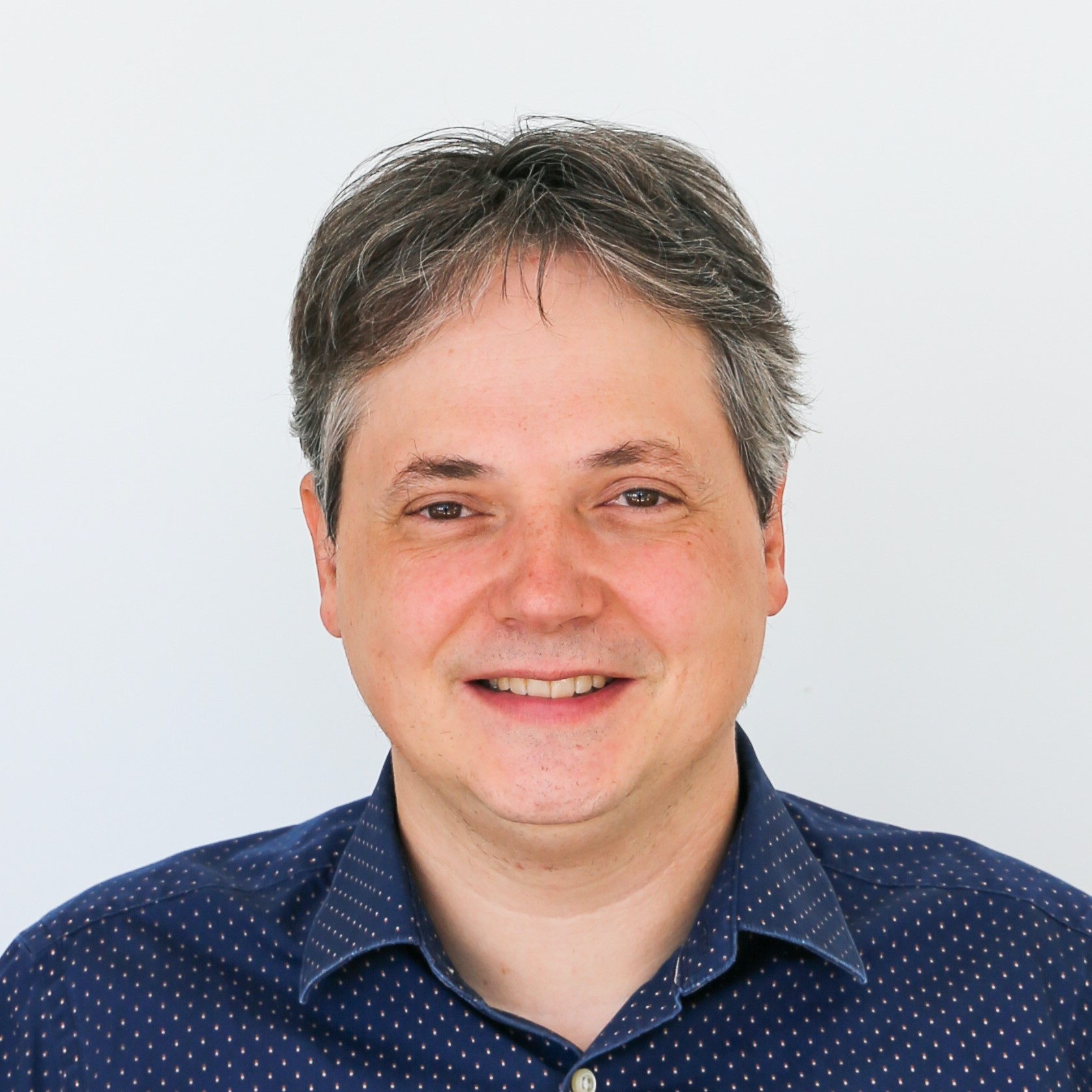
  author    = {Corigliano, Davide and Benchekroun, Otman and Barbic, Jernej},
  title     = {Physics Is Easier Than You Think: From Classical to Neural Elastic Simulation},
  booktitle = {ACM SIGGRAPH 2026 Courses},
  series    = {SIGGRAPH '26},
  year      = {2026},
  month     = {July},
  publisher = {ACM},
  location  = {Los Angeles, CA, USA},
}